
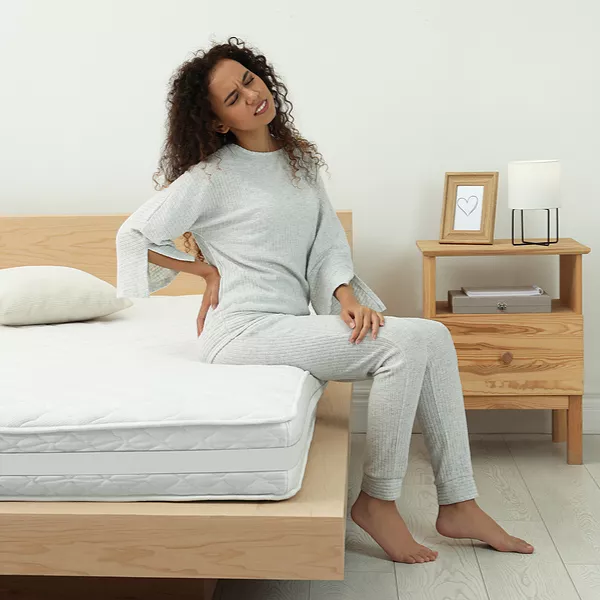
Why Is My Mattress Sagging?
A mattress can develop a softer area over time because its materials are compressed by regular use. Some visible settlement is normal, particularly during the early life of a mattress, but a deep or persistent dip can indicate excessive wear, inadequate support, damaged components or an unsuitable base.
Before replacing your mattress, it is worth checking whether what you are seeing is a normal body impression, genuine sagging or a problem with the bed base underneath it.
Quick Guide: Mattress Sagging
Check The Dip
Remove the bedding and inspect the mattress when nobody is lying on it. A temporary impression is different from a persistent depression.
Check The Base
An unsuitable, damaged or poorly supported base can contribute to uneven mattress wear and may be mistaken for mattress sagging.
Try Rotating
If the manufacturer permits rotation, regularly changing the orientation can help distribute wear more evenly.
Check The Warranty
If the mattress is relatively new or the dip appears excessive, check the manufacturer's warranty terms before attempting repairs.
Normal Settlement vs Genuine Sagging
Not every visible change in a mattress means it has failed. Upholstery, foam and other comfort materials can settle where the mattress is regularly used.
| Normal Settlement / Body Impression | Possible Genuine Sagging |
|---|---|
| Usually appears in the areas where the mattress is regularly slept on. | A pronounced dip remains when the mattress is unoccupied. |
| The surface may look slightly less uniform but still feels supportive. | You may feel as though you are sinking towards the centre or into a particular area. |
| Often associated with normal compression of comfort layers. | May be linked to excessive compression, damaged springs or inadequate underlying support. |
| May improve after rotating the mattress if rotation is permitted. | Continues or becomes more noticeable despite correct care and rotation. |
What Are Body Impressions?
A body impression is a visible or felt change in the mattress surface where your body regularly rests. It is particularly common in mattresses with substantial comfort layers because materials compress under repeated pressure.
A body impression is not automatically a sign that the mattress needs replacing. The important questions are how deep the impression is, whether it remains when the mattress is empty, whether support has changed and what the manufacturer's warranty considers acceptable wear.
Common Causes Of Mattress Sagging
1. Mattress Age
Mattress materials naturally become less resilient with use. As a mattress gets older, repeated compression can eventually lead to more noticeable loss of support.
2. Foam Compression
Foam comfort layers can compress over time, particularly in areas receiving the most pressure. Different foams respond differently depending on their construction and density.
3. Damaged Springs
In a sprung mattress, a damaged or weakened spring system can contribute to an uneven sleeping surface or loss of support.
4. Incorrect Base
A mattress needs an appropriate foundation. Incorrect slat spacing, a damaged base or an incompatible support system can affect how the mattress performs.
5. Inadequate Support
If the mattress or its base does not provide sufficient support for the sleeper or the intended use, compression can become more noticeable over time.
6. Weight Distribution
If one area of the mattress receives considerably more use than another, that section can wear differently. Couples may also notice different impressions on each side.
Can Weight Distribution Cause A Mattress To Sag?
Mattresses are designed to support the people sleeping on them, but repeated pressure is not always distributed evenly. Sleeping in the same position every night, sitting on the edge or having one side of a mattress used much more frequently can contribute to uneven wear.
Single Sleeper
One side or one area may receive most of the nightly use, particularly on a larger mattress.
Two Sleepers
Different body weights and sleeping positions can produce different levels of compression on each side.
Edge Sitting
Frequently sitting on the same edge can place concentrated pressure on that part of the mattress and its support system.
Could The Bed Base Be Causing The Sagging?
Yes. A mattress and its base work together, so the surface underneath should not be overlooked when investigating a dip.
| Base Issue | What To Check |
|---|---|
| Broken or damaged slats | Look for cracked, broken, bowed or displaced slats. |
| Incorrect slat spacing | Check that the base meets the mattress manufacturer's requirements. |
| Uneven support | Check whether the base itself dips, flexes excessively or is unstable. |
| Damaged divan or foundation | Inspect the base for structural damage or deterioration. |
| Incompatible base | Confirm that the mattress is designed to work with the type of base being used. |
How To Check Whether Your Mattress Is Really Sagging
1. Remove Bedding
Inspect the mattress without sheets, blankets or a mattress topper hiding the surface.
2. Look From The Side
Stand back and look across the mattress to identify any obvious uneven areas.
3. Check The Base
Inspect the support underneath for broken slats, dips or other signs of damage.
4. Measure If Needed
If you are considering a warranty claim, follow the manufacturer's method for measuring or documenting any indentation.
Can Rotating Your Mattress Help?
Rotating a mattress can help distribute wear more evenly when the mattress is designed to be rotated. It may reduce the concentration of wear in one sleeping position, but it will not repair permanently damaged springs or severely compressed materials.
If Rotation Is Recommended
Rotate the mattress according to the manufacturer's instructions and recommended schedule.
If Rotation Is Not Recommended
Do not rotate a mattress against the manufacturer's instructions. Some mattresses are designed to remain in one orientation.
What Rotation Cannot Do
Rotation can distribute wear, but it cannot restore permanently compressed foam or repair a damaged internal support system.
Will A Mattress Topper Fix Sagging?
A mattress topper can change how a mattress feels, but it is not a structural repair. Whether it is useful depends on how severe the dip is and what you are trying to solve.
| Situation | Could A Topper Help? |
|---|---|
| Mattress feels slightly too firm | Potentially. A suitable topper can alter the comfort feel. |
| Minor surface unevenness | It may improve surface comfort, depending on the condition of the mattress. |
| Deep, persistent sag | Usually not a proper solution. The underlying support problem remains. |
| Damaged springs | No. A topper does not repair damaged internal components. |
Does Sagging Differ Between Mattress Types?
| Mattress Type | What You May Notice | What To Check |
|---|---|---|
| Memory Foam | Comfort layers can develop impressions from repeated pressure. | Foam condition, mattress age and base support. |
| Hybrid | Both comfort-layer compression and spring support can affect the surface. | Foam condition, spring performance and foundation. |
| Pocket Sprung | Unevenness may be associated with comfort layers or the spring unit. | Springs, upholstery and base compatibility. |
| Open Coil | Wear can affect the overall support and sleeping surface. | Spring condition, mattress age and base. |
Could Mattress Sagging Be Covered By The Warranty?
Possibly. Warranty terms vary between manufacturers and mattresses, and normal wear or acceptable settlement may be treated differently from a manufacturing defect.
If your mattress is within its warranty period and has developed an unusually deep or persistent indentation, check the warranty documentation before attempting to repair or modify the mattress.
Keep your proof of purchase and take clear photographs if you need to contact the retailer or manufacturer. You may also be asked to provide information about the mattress, its age, the base it has been used on and the nature of the problem.
Before Making A Warranty Claim
Check The Warranty
Read the terms carefully, including any conditions relating to settlement, indentation depth and the required bed base.
Document The Problem
Take photographs of the mattress without bedding and record when you first noticed the problem.
Check The Base
Make sure the mattress has been used on a suitable base and that the base is not damaged.
When Should You Replace A Sagging Mattress?
Replacement is worth considering when the mattress has lost enough support or comfort that normal care and rotation no longer make a meaningful difference.
Replace Soon If...
There is a deep, persistent dip, you regularly feel unsupported, or the mattress is clearly past its useful life and comfort has deteriorated.
Check The Base First If...
The mattress appears relatively sound but the base has broken slats, uneven support or visible structural damage.
Check The Warranty First If...
The mattress is relatively new and has developed a significant indentation or support problem that does not appear to be normal settlement.
Mattress Sagging: What Should You Do?
Is it persistent?
Is support suitable?
Can it be rotated?
Could it be covered?
Restore proper support
What Not To Do If Your Mattress Is Sagging
Don't Ignore The Base
Replacing a mattress without checking a damaged or unsuitable base may not solve the underlying problem.
Don't Flip Unless Permitted
Many modern mattresses are designed for one-sided use. Only flip a mattress if the manufacturer says it is suitable.
Don't Assume A Topper Will Fix It
A topper can alter comfort but cannot restore a failed support system or repair a damaged mattress.
Don't Repair The Mattress Yourself
Cutting, opening or modifying the mattress can damage its construction and may affect warranty eligibility.
Mattress Sagging Checklist
FAQs About Sagging Mattresses
Is it normal for a new mattress to sag slightly?
Some initial settlement or body impressions can be normal as the comfort materials adapt to regular use. A significant or persistent dip, particularly on a relatively new mattress, is worth investigating against the manufacturer's care and warranty requirements.
What is the difference between a body impression and sagging?
A body impression is usually localised to the areas where you sleep and can result from normal compression of comfort materials. Genuine sagging is more concerning when a pronounced depression remains when the mattress is empty or when the mattress has noticeably lost support.
Can rotating a mattress stop it from sagging?
Rotation can help distribute wear more evenly when permitted by the manufacturer. It cannot reverse permanent material compression or repair damaged springs.
Can a mattress topper fix a sagging mattress?
A topper may improve the surface feel of a mattress with minor unevenness, but it does not repair the underlying support. A deep or persistent sag is unlikely to be properly fixed by adding a topper.
Can the bed base make a mattress sag?
Yes. Broken slats, unsuitable spacing, uneven support or a damaged foundation can affect the way a mattress is supported and may contribute to unevenness.
Can damaged springs cause a mattress to sag?
They can. A damaged or weakened spring system may result in an uneven sleeping surface or reduced support. If you suspect an internal fault, check the warranty before attempting any repair.
How long should a mattress last before sagging becomes a concern?
There is no single lifespan that applies to every mattress. Construction, materials, usage and care all affect longevity. The mattress's condition and level of support are more useful indicators than age alone.
When should I replace a sagging mattress?
Replacement becomes the sensible option when the mattress has a persistent, significant dip, no longer provides adequate support or comfort, and the problem cannot reasonably be addressed through correct care, base support or a valid warranty claim.
More Bed & Mattress Guides
Need A New Mattress?
If your mattress has reached the end of its useful life, choosing the right replacement can make a significant difference to comfort and support. Explore our mattress buying guide to help narrow down your options.
Explore The Mattress Buying Guide