
Why Does My Bed Squeak?
A squeaky bed usually means that two components are moving against each other under pressure. That movement might come from a loose joint, bolt, slat, foot, castor, headboard or another part of the bed.
However, the noise does not always come from the part that appears to move. Sound can travel through a bed frame, making it easy to tighten the wrong component and leave the actual problem untouched.
The best approach is therefore to find the exact point where the noise is generated first, then deal with the specific cause.
Quick Guide
1. Recreate The Noise
Apply gentle pressure to different parts of the bed until you can reproduce the squeak.
2. Isolate The Area
Test the mattress, base, frame, headboard, feet and floor separately.
3. Identify The Contact Point
Look for parts rubbing, rocking or shifting when the noise occurs.
4. Fix That Part
Tighten, reposition, secure or repair the specific component rather than treating the whole bed.
How To Identify Exactly Where The Noise Is Coming From
This is the most important part of fixing a squeaky bed. Start with the mattress in place, then gradually remove variables until you know which component is producing the noise.
Step 1: Test The Mattress
Sit or press on different areas of the mattress. If the noise occurs without visibly moving the bed frame, the mattress itself or its contact with the base may be involved.
Step 2: Test The Base
With the mattress removed where practical, apply gentle pressure to the base. Listen for movement around joints, slats, panels, feet and other connections.
Step 3: Test The Frame
Push the frame gently from different directions. A squeak that appears when the frame twists or rocks can indicate a joint or fixing problem.
Step 4: Test The Floor
Rock the bed carefully and watch whether one foot lifts or the frame shifts. An uneven floor can cause repeated movement at the feet.
Listen for the movement, not just the sound
Place one hand lightly on the suspected joint, slat or fitting while applying gentle pressure with the other. Feeling a small movement at the same moment as the squeak can help pinpoint the source.
Why Is My Divan Bed Squeaking?
Divan beds have a different construction from traditional bed frames, so the source of a squeak can often be found around the base sections, castors, feet, connectors or the mattress-to-base contact point.
Base Connections
Where a divan uses separate base sections, check the connection between the sections for movement or looseness.
Feet & Castors
A loose foot or castor can allow the base to rock slightly against the floor and create a squeak.
Mattress Movement
If the sound only occurs when the mattress moves, check whether it is rubbing against the base or another component.
If the divan base itself is stable but the squeak remains, remove the mattress where practical and test the base independently. This helps distinguish a base noise from a mattress-related noise.
Why Is My Wooden Bed Squeaking?
Wooden beds can squeak when timber components move against each other. The noise is commonly associated with joints, slats, bolts or areas where different components meet under load.
| Possible source | What to look for | Possible solution |
|---|---|---|
| Frame joint | Joint moves when the bed is rocked. | Check and secure the relevant fixing according to the manufacturer's instructions. |
| Slat contact | Squeak occurs when pressure is applied directly over a particular slat. | Check slat position, supports and contact points. |
| Bolt or fixing | Movement is concentrated around a connection. | Check the fixing and tighten appropriately without overtightening. |
| Headboard connection | Noise occurs when the headboard is pushed or moved. | Check the headboard mounting points and connections. |
Why Is My Metal Bed Squeaking?
Metal beds can produce a noticeable squeak when metal components shift against each other. Connections between rails, brackets, supports and legs are worth checking carefully.
Metal Joints
Apply gentle pressure near each joint and listen for the point where the noise begins.
Bolts & Brackets
Loose connections can allow rails and supports to shift under load.
Feet & Legs
Check whether the legs remain firmly positioned when the frame is rocked gently.
Avoid assuming that the loudest part of the frame is the source. Metal can transmit vibration, so test individual joints systematically.
Why Is My Ottoman Bed Squeaking?
Ottoman beds contain additional moving parts because the sleeping platform lifts to access the storage area. Hinges, lifting mechanisms, frame connections and the base itself can therefore all contribute to noise.
| Area | Test | What it may indicate |
|---|---|---|
| Lifting mechanism | Open and close the mechanism carefully without sleeping on the bed. | Noise linked specifically to the lifting hardware. |
| Hinges | Apply controlled pressure around the hinge area. | Movement or friction at the hinge connection. |
| Mattress platform | Press different areas with the platform closed. | Possible platform, slat or frame movement. |
| Base and feet | Rock the bed gently from the sides. | A stable-looking platform may still be sitting unevenly on the floor. |
Important: If an ottoman's lifting mechanism appears damaged, loose or unsafe, stop using the mechanism until it has been checked or repaired appropriately.
Why Is My Slatted Bed Squeaking?
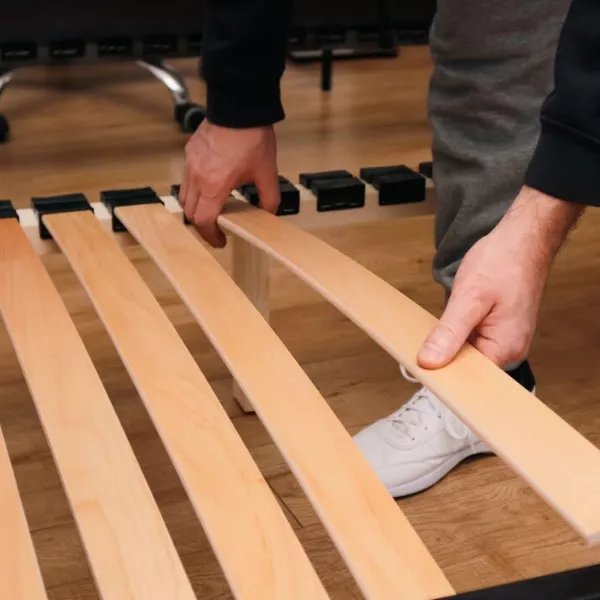
Slatted beds have multiple contact points, so a squeak can come from an individual slat, its support, the frame or the mattress moving against the slats.
Individual Slat
Press down on individual slats to see whether one particular location reproduces the noise.
Slat Support
Check where the slat rests on the frame or support rail. Movement at the contact point can create friction.
Mattress Contact
If the noise only happens when the mattress moves, the mattress may be rubbing against the slatted surface or frame.
Centre Support
For larger beds, check the centre support and its contact with the floor or frame.
What Is Causing The Squeak?
| Possible cause | Typical clue | First thing to check |
|---|---|---|
| Loose bolts | Noise when the frame twists or is rocked. | Specific frame connections. |
| Feet | Noise or rocking near the bottom of the bed. | Foot-to-frame connection and floor contact. |
| Castors | Movement or noise when the base shifts. | Castor attachment and floor contact. |
| Slats | Noise concentrated over one section of the bed. | Slat position and support points. |
| Joints | Squeak appears when the frame flexes. | Joint movement and fixings. |
| Headboard | Noise when leaning against or moving the headboard. | Mounting points and connections. |
| Mattress movement | Noise follows mattress movement rather than frame movement. | Mattress-to-base or mattress-to-frame contact. |
| Uneven floor | Bed rocks or one foot appears less stable. | Floor and foot contact. |
A Step-By-Step Squeak Diagnosis
If you cannot immediately identify the source, work through the bed in a fixed order.
1. Mattress
Press, sit and move across different areas. Note exactly when the noise occurs.
2. Slats & Base
Test individual slats and base sections for movement or friction.
3. Frame Joints
Push the frame from each side and listen for a repeatable squeak.
4. Headboard
Push the headboard independently to see whether it produces the same sound.
5. Feet
Check each foot or castor for movement and make sure it is properly seated.
6. Floor
Check for rocking caused by uneven contact between the bed and floor.
How To Fix A Squeaky Bed
Secure Loose Fixings
Once you have identified the noisy joint, check the relevant bolts, screws or connectors and secure them according to the manufacturer's instructions.
Reposition Slats
If one slat is moving or sitting incorrectly, reposition it as instructed by the bed manufacturer.
Secure Feet & Castors
Check that feet and castors are correctly attached and making stable contact with the floor.
Check The Headboard
If the headboard is the source, check its mounting points rather than tightening unrelated parts of the bed.
Address Floor Movement
If the bed rocks because of uneven flooring, the underlying stability issue needs to be addressed appropriately.
Check The Mattress
If the noise follows mattress movement, investigate the mattress and its contact with the base before dismantling the frame.
When Should You Stop And Investigate Further?
A squeak is usually a minor nuisance, but unusual movement should not be ignored. Stop using the bed and investigate further if you notice a cracked structural component, badly damaged slat, broken lifting mechanism, significantly loose frame connection or instability that cannot be corrected.
For beds with specialist lifting mechanisms or other safety-critical components, follow the manufacturer's instructions rather than attempting an improvised repair.
What Not To Do
- Do not tighten every screw without first identifying the noisy area.
- Do not assume the loudest point is necessarily the source of the noise.
- Do not force damaged joints, bolts or brackets back into position.
- Do not use unsuitable lubricants or chemicals on materials without checking the manufacturer's guidance.
- Do not ignore a bed that is rocking, unstable or structurally damaged.
- Do not remove safety-critical components from an ottoman mechanism without understanding the manufacturer's instructions.
Squeaky Bed Checklist
Frequently Asked Questions
Why is my bed squeaking when I move?
The noise is usually caused by movement between components. Loose joints, bolts, slats, feet, castors, headboards or mattress-to-base contact can all produce squeaking.
Why does my wooden bed squeak?
Wooden beds can squeak when timber components move against each other or when joints, slats and fixings shift under pressure. Test each area individually to find the exact source.
Why does my metal bed squeak?
Metal beds can squeak when rails, brackets, bolts or other metal components move against each other. Check individual connections rather than assuming the whole frame is responsible.
Can a mattress cause a squeaky bed?
Yes. If the noise occurs when the mattress moves but not when the empty base or frame is tested, the sound may come from the mattress or its contact with the base.
Why does my bed squeak from underneath?
The noise may be coming from feet, castors, centre supports, base connections or contact between the bed and an uneven floor. Test the lower parts of the bed separately.
Should I tighten all the screws on my bed?
Not necessarily. First identify the source of the noise. Once the specific joint or fixing has been identified, check and secure it according to the manufacturer's instructions. Tightening unrelated components will not necessarily solve the problem.
More Bed & Mattress Guides
Looking For A New Bed?
Choosing a well-matched mattress and bed base is an important part of creating a stable, comfortable sleeping setup.
Explore Our Bed Buying Guide