
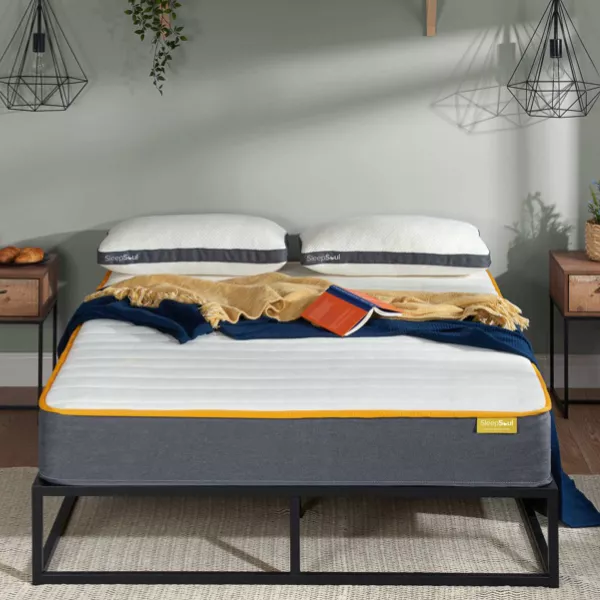
Quick Guide to Memory Foam Mattresses
Memory foam mattresses use responsive foam that moulds around the body under pressure. They are particularly popular with sleepers who want a cushioning, body-contouring feel and pressure relief.
Best For Pressure Relief
Memory foam cushions areas such as the shoulders and hips and can reduce pressure points.
Best For Motion Isolation
The foam absorbs movement, making memory foam a popular option for couples.
Best For A Hugging Feel
Memory foam contours closely to the body rather than providing the springy feel of traditional springs.
What Is a Memory Foam Mattress?
Memory foam, also known as viscoelastic foam, is designed to respond to pressure and body weight. As you lie on the mattress, the foam adapts to your shape and gradually recovers when the pressure is removed.
The result is a more moulded, cushioning feel than you typically get from an open coil or traditional spring mattress. The overall comfort depends on the quality, thickness and density of the foam, as well as the support structure underneath it.
Some mattresses use memory foam as the main comfort material, while others combine it with pocket springs or other support systems.
How Does Memory Foam Work?
Memory foam responds to pressure rather than relying on interconnected springs. When you lie down, the foam compresses around areas where your body places more weight.
1. Pressure Response
The foam compresses beneath your body weight.
2. Body Contouring
The surface adapts to your body shape and sleeping position.
3. Pressure Relief
Weight is distributed across a wider area of the mattress.
4. Slow Recovery
The foam gradually returns towards its original shape when pressure is removed.
Memory Foam vs Other Mattress Types
The biggest difference is how each construction responds when you move. Memory foam prioritises contouring and pressure relief, while spring-based mattresses generally feel more responsive.
| Feature | Memory Foam | Pocket Sprung | Hybrid |
|---|---|---|---|
| Feel | Moulded and cushioning | Responsive and springy | Balanced and responsive |
| Pressure Relief | Excellent | Good | Very good |
| Motion Transfer | Low | Low to moderate | Low to moderate |
| Airflow | Depends on construction | Generally strong | Generally good |
| Best For | Contour and pressure relief | Responsive support | A combination of foam and springs |
Benefits of a Memory Foam Mattress
Pressure Relief
Memory foam can spread body weight across the sleeping surface, helping cushion pressure-sensitive areas.
Body Contouring
The foam adapts to your shape, creating a close-fitting feel that many sleepers find comfortable.
Reduced Motion Transfer
Foam absorbs movement, which can make memory foam a useful option for couples with different sleeping patterns.
Choice of Firmness
Memory foam mattresses are available in different firmness levels, from softer cushioning to firmer supportive constructions.
Who Are Memory Foam Mattresses Best For?
Memory foam can suit a wide range of sleepers, but the right construction depends on your sleeping position, preferred firmness and how much you move during the night.
Side Sleepers
Memory foam can be a strong option for side sleepers because its cushioning feel can help accommodate the shoulders and hips.
Back Sleepers
Back sleepers may prefer a medium or medium-firm memory foam mattress that combines contouring with enough support to prevent excessive sinking.
Front Sleepers
Front sleepers generally need stronger support around the middle of the body. A supportive medium-firm or firm construction may be more suitable than a very soft memory foam mattress.
Couples
Memory foam is particularly useful for couples who want to reduce the amount of movement transferred across the mattress when one person turns or gets up.
What Firmness Should You Choose?
There is no single firmness that suits everyone. Your sleeping position, body weight and personal preference all affect which feel is most comfortable.
| Firmness | Typical Feel | May Suit |
|---|---|---|
| Soft | Plush and deeply cushioning | Sleepers who prefer a softer surface |
| Medium | Balanced cushioning and support | A wide range of sleepers |
| Medium-Firm | More supportive with controlled cushioning | Back and front sleepers, depending on preference |
| Firm | Stable with less sink | Sleepers who prefer stronger support |
Do Memory Foam Mattresses Sleep Hot?
Traditional memory foam can retain more heat than highly breathable spring constructions because the sleeper is surrounded by foam. However, modern mattresses can use ventilation, breathable covers, gel-infused materials and other cooling technologies to improve temperature regulation.
If you regularly sleep hot, compare the construction rather than choosing a mattress based on the words “memory foam” alone. Hybrid mattresses can also be worth considering if you want the cushioning of foam with additional airflow from springs.
How Deep Should a Memory Foam Mattress Be?
Mattress depth affects the overall height and feel of your bed, but a deeper mattress is not automatically more supportive. Construction, foam quality and the support layers underneath are more important than depth alone.
Before choosing a deep memory foam mattress, check your bed frame dimensions, fitted sheet depth and the final height of the complete bed.
Read the Mattress Depth GuideWhat Bed Base Is Best for Memory Foam?
Memory foam mattresses need a suitable, supportive foundation. Depending on the mattress design, they can be used on suitable divans, platform bases and slatted bed frames.
Always check the individual mattress manufacturer's requirements before placing a memory foam mattress on a particular base. Slat spacing, ventilation and the type of foundation can affect compatibility.
Check Mattress & Bed Base CompatibilityDifferent Types of Memory Foam Mattress
Traditional Memory Foam
Traditional memory foam focuses on the classic contouring feel, providing close body support and pressure relief.
Gel Memory Foam
Gel-infused foam is designed to improve temperature management while retaining the cushioning properties associated with memory foam.
Memory Foam & Pocket Spring
These mattresses combine pressure-relieving foam with individually responsive springs, creating a balance between contouring and spring support.
Cooling Memory Foam
Cooling constructions may use breathable covers, ventilation or specialist comfort materials to help manage heat during sleep.
Memory Foam Mattress Buying Checklist
01 · Choose your firmness
Consider your sleeping position and whether you prefer a softer, balanced or firmer feel.
02 · Check the construction
Look beyond the memory foam layer and consider the support core beneath it.
03 · Consider temperature
If you sleep warm, look for breathable or cooling features.
04 · Check the depth
Make sure the mattress works with your bed frame, sheets and desired overall bed height.
05 · Check compatibility
Confirm that your existing base is suitable for the mattress.
06 · Think about movement
If you share a bed, memory foam can help reduce movement transfer between sleepers.
07 · Compare the alternatives
Consider pocket sprung and hybrid mattresses if you prefer more bounce, airflow or responsiveness.
Common Memory Foam Mattress Buying Mistakes
Choosing Based on Depth Alone
A thicker mattress is not necessarily better. Look at the complete construction and support system.
Choosing Too Soft
A very soft mattress may allow excessive sinking, particularly around the hips and stomach. Your sleeping position should help guide the firmness you choose.
Ignoring Heat
If you sleep hot, check ventilation and cooling features before choosing a traditional all-foam construction.
Forgetting the Bed Base
A good mattress still needs an appropriate foundation. Always check compatibility before ordering.
Only Comparing Materials
Two memory foam mattresses can feel very different depending on their foam layers, firmness, construction and support core.
Memory Foam Mattress FAQs
Are memory foam mattresses good?
Memory foam can be an excellent choice if you want pressure relief, body contouring and reduced motion transfer. The best mattress depends on your preferred feel and support requirements.
Are memory foam mattresses good for side sleepers?
Yes. The cushioning and contouring properties of memory foam can work well for side sleepers, particularly when the firmness provides enough support without creating excessive pressure at the shoulders and hips.
Are memory foam mattresses good for back sleepers?
They can be. Back sleepers should look for a construction that provides contouring without allowing the hips to sink too deeply.
Are memory foam mattresses good for front sleepers?
They can be, but front sleepers generally benefit from stronger support around the middle of the body. A supportive medium-firm or firm construction may be preferable to a very soft mattress.
Do memory foam mattresses reduce movement?
Yes. Memory foam absorbs movement within the mattress, which can help reduce the amount of movement felt by another sleeper.
Do memory foam mattresses get hot?
Some traditional memory foam mattresses can retain heat. Cooling covers, ventilation and specialist materials can improve temperature management, so compare the individual construction carefully.
Can you put a memory foam mattress on a divan?
Yes, where the mattress manufacturer confirms that the particular divan construction is compatible. Always check the manufacturer's requirements before use.
How long does a memory foam mattress last?
Lifespan varies according to the quality of the materials, construction, usage and care. Signs such as permanent sagging, reduced support or a noticeable deterioration in comfort can indicate that a mattress needs replacing.
Is a memory foam mattress better than a pocket sprung mattress?
Neither is automatically better. Memory foam is generally more contouring and cushioning, while pocket springs provide a more responsive feel and can offer strong airflow. Your preferred feel should guide the choice.
Need More Mattress Advice?
Still deciding which mattress is right for you? Explore our helpful guides for more information on mattress types, sizes, depth, firmness and choosing the right support for your sleep.
Find Your Memory Foam Mattress
Explore memory foam mattresses in different sizes and comfort levels to find the right balance of cushioning, pressure relief and support.
Shop Memory Foam Mattresses