
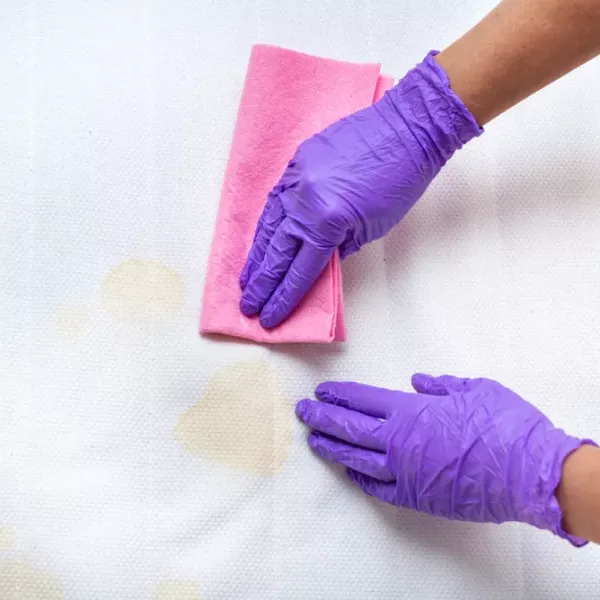
Quick Guide: How to Remove a Mattress Stain
The most important thing is to deal with a stain as soon as possible. The longer liquid or dirt remains in the mattress, the more difficult it can be to remove.
01 · Blot
Use a clean cloth to absorb as much liquid as possible. Avoid rubbing the stain deeper into the fabric.
02 · Treat
Use a suitable mild cleaning solution and apply it sparingly to the affected area.
03 · Dry
Allow the mattress to dry completely before putting bedding back on it.
Before You Start Cleaning
Mattresses contain different combinations of foam, springs, fabric and other materials. Cleaning methods that are suitable for one mattress may not be suitable for another.
- Check the manufacturer's cleaning and care instructions first.
- Remove all bedding and the mattress protector.
- Vacuum the mattress gently to remove loose dirt and debris.
- Test any cleaning solution on a small, inconspicuous area first.
- Use as little liquid as possible.
- Never soak the mattress.
Important: Excess moisture can become trapped inside a mattress and may contribute to mould or mildew, so thorough drying is essential.
How to Remove a Stain Step by Step
1. Remove the Bedding
Take off sheets, blankets, pillows and any mattress protector. Wash the removable bedding separately according to its care instructions.
2. Absorb Excess Liquid
If the stain is still wet, gently blot the area using a clean, dry cloth or paper towel. Press down to absorb the liquid rather than rubbing from side to side.
3. Vacuum the Mattress
Once the excess moisture has been removed, gently vacuum the mattress surface using a suitable attachment. This removes loose dust and debris before you start spot cleaning.
4. Apply a Small Amount of Cleaning Solution
Use a mild cleaning solution suitable for your mattress. Apply it sparingly to the stained area rather than soaking the entire mattress.
5. Blot the Area
Use a clean cloth to gently dab the stain. Work from the outside towards the centre where possible to avoid spreading the mark.
6. Remove Residue
If necessary, use a clean, lightly dampened cloth to lift away remaining cleaning solution. Avoid adding unnecessary moisture.
7. Allow the Mattress to Dry Completely
Leave the mattress uncovered and allow plenty of air to circulate. A fan can help speed up drying. Do not remake the bed until the mattress is completely dry.
Different Stains Need Different Approaches
The best approach depends on what caused the stain. Always check your mattress manufacturer's instructions before using a cleaning product.
| Stain | What to Do | Avoid |
|---|---|---|
| Sweat & Yellow Stains | Blot and spot clean with a suitable mild solution. Allow the area to dry thoroughly. | Soaking the mattress or aggressively scrubbing the fabric. |
| Blood | Treat as soon as possible and use cold water when appropriate, blotting rather than rubbing. | Hot water, which can make protein-based stains harder to remove. |
| Urine | Blot thoroughly first, then use a suitable spot-cleaning method and allow the mattress to dry completely. | Leaving moisture trapped inside the mattress. |
| Coffee & Tea | Blot excess liquid promptly and spot clean with a mild solution. | Rubbing the stain outward and spreading it across a larger area. |
| Food & Drink | Remove solids first, blot liquids and then spot clean the remaining mark. | Using large amounts of water or harsh chemicals. |
How to Remove Sweat Stains from a Mattress
Sweat can contribute to yellow or discoloured areas on a mattress over time. Start by vacuuming the surface, then spot clean the affected area with a suitable mild cleaning solution.
Work gently with a clean cloth and avoid saturating the mattress. Once treated, leave the mattress uncovered until completely dry.
For Older Yellow Stains
Older stains can be more difficult to remove completely. Avoid repeatedly soaking or aggressively scrubbing the mattress in an attempt to remove stubborn discolouration, as this can damage the cover or introduce excess moisture.
How to Remove Blood from a Mattress
Blood stains should be treated as quickly as possible. Begin by blotting fresh blood with a clean cloth and cold water.
Work gently and avoid rubbing, which can spread the stain. If a suitable stain treatment is needed, check the mattress manufacturer's guidance first and test the product on a hidden area.
Why Cold Water?
Blood is a protein-based stain, and hot water can make protein stains more difficult to remove. Cold water is therefore the safer starting point.
How to Remove Urine from a Mattress
For fresh urine, absorb as much liquid as possible immediately using clean towels or cloths. Press firmly without rubbing to draw the moisture out of the mattress surface.
Once the excess moisture has been removed, use a suitable mattress-safe cleaning method and allow the mattress to dry completely before using it again.
Fresh Stain
Act quickly. The priority is removing as much moisture as possible before it penetrates deeper into the mattress.
Older Stain
Older stains and persistent odours can be harder to remove. Avoid repeatedly saturating the mattress and consider professional cleaning if appropriate.
How to Remove Coffee and Tea Stains
Blot spilled coffee or tea immediately using a clean, dry cloth. Once the excess liquid has been absorbed, use a small amount of mild cleaning solution suitable for the mattress.
Blot the affected area rather than rubbing it. If necessary, use a clean, lightly dampened cloth to remove residue before leaving the mattress to dry.
The key is speed: fresh liquid is much easier to deal with than a stain that has been allowed to dry and set.
Can You Use Baking Soda on a Mattress?
Baking soda is commonly used to freshen mattresses and absorb odours. Mattress365's current mattress-care guidance recommends sprinkling baking soda over the surface, allowing it to sit and then vacuuming it away.
It is more useful for freshening and deodorising than for removing every type of stain. For a visible stain, deal with the stain itself first rather than relying on baking soda alone.
Keep It Dry
Do not combine lots of powder with large amounts of liquid. The priority when cleaning a mattress is always to minimise moisture and allow the mattress to dry fully.
What Not to Do When Cleaning a Mattress
Don't Soak It
Mattresses are not designed to be saturated. Excess moisture can become trapped inside the materials.
Don't Scrub Aggressively
Hard scrubbing can spread a stain and damage the mattress cover or fabric.
Don't Use Harsh Chemicals
Strong cleaning products may damage fabrics, foams or other mattress materials. Follow the manufacturer's guidance.
Don't Cover It While Damp
Allow the mattress to dry completely before replacing bedding or a mattress protector.
How to Dry a Mattress After Cleaning
Drying is one of the most important parts of mattress stain removal. Any remaining moisture should be allowed to evaporate before the mattress is covered or used.
- Leave the mattress uncovered.
- Open windows where practical to improve ventilation.
- Use a fan to increase air circulation.
- Keep the affected area exposed to moving air.
- Do not put sheets back on until the mattress is completely dry.
If a mattress remains damp or develops a persistent musty smell after cleaning, seek appropriate professional advice rather than repeatedly adding more cleaning solution.
How to Prevent Mattress Stains
The easiest stain to remove is the one that never reaches the mattress in the first place.
Use a Mattress Protector
A protector provides a washable barrier between your bedding and mattress and can help protect against spills, dirt and moisture.
Wash Bedding Regularly
Regularly washing sheets and bedding helps reduce the amount of sweat, dirt and debris reaching the mattress.
Deal With Spills Quickly
The sooner you blot a spill, the less opportunity it has to penetrate the mattress.
Air the Mattress
When changing bedding, allow air to circulate around the mattress before remaking the bed.
When Should You Replace a Stained Mattress?
Not every stain means you need a new mattress. If the mattress is otherwise comfortable, supportive and structurally sound, a stain can often be treated as part of normal mattress care.
However, replacement may be worth considering if the mattress has persistent odours, extensive staining, mould, significant sagging, damaged materials or a noticeable loss of comfort and support.
Don't Keep Cleaning a Mattress That Needs Replacing
Cleaning can improve hygiene and appearance, but it cannot restore a mattress that has reached the end of its useful life or has significant structural deterioration.
Mattress Stain Removal Checklist
01 · Check the Instructions
Always check the manufacturer's cleaning recommendations before using a product.
02 · Remove Bedding
Strip the bed completely and wash the removable bedding separately.
03 · Blot First
Remove as much liquid as possible before applying any cleaning solution.
04 · Spot Clean
Use a suitable mild solution sparingly and treat only the affected area.
05 · Don't Scrub
Gently blot rather than aggressively rubbing the stain into the fabric.
06 · Dry Completely
Allow plenty of ventilation and make sure the mattress is completely dry before use.
Mattress Stain Removal FAQs
What is the best way to remove a stain from a mattress?
Start by checking the manufacturer's instructions, then vacuum the surface, blot excess liquid, spot clean with a suitable mild solution and allow the mattress to dry completely.
Can I use washing-up liquid on a mattress?
A mild detergent may be suitable for some mattresses, but always check the manufacturer's care instructions first and use only a small amount. Test the solution on an inconspicuous area before treating the stain.
How do you remove yellow sweat stains from a mattress?
Vacuum the mattress, gently spot clean the affected area with a suitable cleaning solution and allow it to dry completely. Older stains may not disappear completely.
How do you remove blood stains from a mattress?
Blot fresh blood with cold water and a clean cloth, working gently rather than rubbing. Check the manufacturer's guidance before using any additional stain treatment.
How do you remove urine from a mattress?
Blot as much liquid as possible immediately, use a suitable mattress-safe spot-cleaning method and allow the mattress to dry thoroughly before covering it again.
Can I use baking soda to clean a mattress?
Baking soda can be useful for freshening and absorbing odours. It is not a complete solution for every type of stain, so visible marks should be treated separately.
Can I steam clean a mattress?
Do not assume that steam cleaning is suitable for your mattress. Heat and moisture can affect some mattress materials, so follow the manufacturer's specific cleaning instructions.
How do I get an old stain out of a mattress?
Older stains are usually more difficult to remove. Use a suitable spot-cleaning method and avoid repeatedly soaking or aggressively scrubbing the mattress.
How long does a mattress take to dry after cleaning?
Drying time depends on how much moisture was used, the mattress construction and the surrounding ventilation. Keep the mattress uncovered and allow it to dry completely before use.
How can I stop my mattress getting stained again?
A washable mattress protector is one of the simplest ways to protect the mattress from spills, moisture and everyday dirt. Regular bedding changes and prompt treatment of spills also help.
Explore Our Bed & Mattress Buying Guides
Looking for more advice? Explore our related buying guides for help choosing the right bed, divan and mattress.
Keep Your Mattress Clean & Fresh
From treating spills quickly to using a mattress protector, simple care can help keep your mattress looking and feeling its best for longer.
Explore Mattress Care Guides