
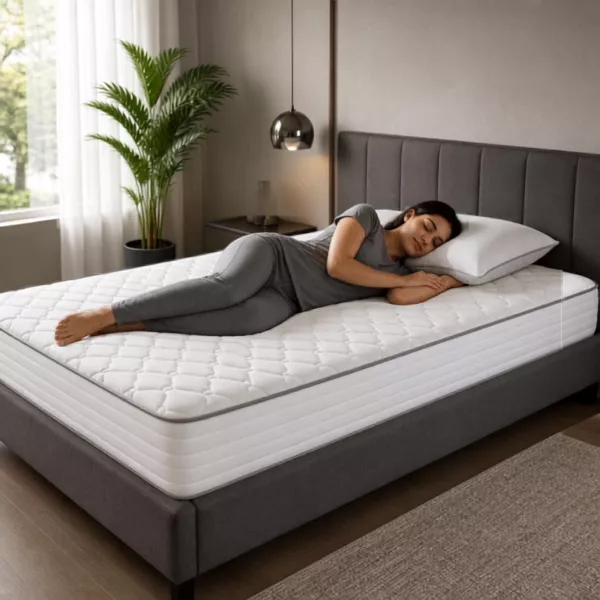
Quick Guide to Orthopaedic Mattresses
Orthopaedic mattresses are designed around enhanced support and are commonly associated with firmer sleeping surfaces. They can be made using different combinations of springs, foam, latex and other support materials.
Supportive Feel
Orthopaedic mattresses generally provide a more structured and supportive feel than softer mattress designs.
Firmness Options
Many orthopaedic mattresses are firm or extra firm, although the exact feel varies between constructions.
Built for Support
The support system is just as important as firmness when choosing an orthopaedic mattress.
What Is an Orthopaedic Mattress?
An orthopaedic mattress is designed to provide enhanced support, particularly around the back and body. Orthopaedic mattresses are commonly associated with firmer constructions that provide less sink and a more stable sleeping surface.
They can use a variety of materials and support systems, including pocket springs, foam, latex and hybrid constructions. The term orthopaedic describes the intended support characteristics rather than one specific mattress material.
Firmness is not the only factor to consider. Your sleeping position, body shape, preferred comfort level and the construction of the mattress all affect how supportive it feels.
How Does an Orthopaedic Mattress Work?
The aim of an orthopaedic mattress is to provide a stable and supportive sleeping surface while distributing body weight across the mattress.
1. Stable Support
The support core helps provide a consistent sleeping surface beneath the body.
2. Controlled Sink
Firmer constructions can reduce the amount of sinking compared with softer mattresses.
3. Weight Distribution
The mattress should distribute body weight effectively across the sleeping surface.
4. Comfort Layers
Supportive mattresses can still include comfort materials to prevent the surface from feeling unnecessarily hard.
Benefits of an Orthopaedic Mattress
Enhanced Support
Orthopaedic mattresses are designed to provide a more structured level of support for sleepers who prefer a firmer feel.
Reduced Sinking
A firmer construction can help limit excessive sinking, particularly around the middle of the body.
Stable Sleeping Surface
A supportive mattress can provide a more stable feel for sleepers who prefer less movement and bounce.
Choice of Construction
Orthopaedic mattresses can be made using different support systems, giving you a choice of feel and comfort.
How Firm Should an Orthopaedic Mattress Be?
Orthopaedic mattresses are commonly firmer than standard mattresses, but the firmest mattress is not automatically the best choice for every sleeper. Your sleeping position, body shape and personal preference should all be considered.
| Firmness | Typical Feel | May Suit |
|---|---|---|
| Medium-Firm | Supportive with some cushioning | Sleepers wanting support without an especially hard surface |
| Firm | Stable with limited sink | Sleepers who prefer stronger support |
| Extra Firm | Very stable with minimal sink | Sleepers who specifically prefer an exceptionally firm feel |
Are Orthopaedic Mattresses Suitable for Every Sleeping Position?
Back Sleepers
Back sleepers may appreciate the stable support of an orthopaedic mattress, particularly if they prefer a firmer feel. Look for a mattress that supports the body without creating uncomfortable pressure points.
Front Sleepers
Front sleepers often prefer stronger support to reduce excessive sinking around the hips and stomach. A firm construction can be a suitable option depending on personal comfort.
Side Sleepers
Side sleepers need enough cushioning around the shoulders and hips. An extremely firm mattress may feel uncomfortable if it does not provide sufficient pressure relief, so a supportive mattress with suitable comfort layers may be preferable.
Combination Sleepers
If you change position throughout the night, consider how easily you can move on the mattress. A supportive but responsive construction may be more comfortable than an exceptionally rigid surface.
Orthopaedic vs Firm Mattress
The terms are often used together, but they are not necessarily identical. A firm mattress describes the feel, while an orthopaedic mattress is marketed around enhanced support and spinal alignment.
| Feature | Orthopaedic Mattress | Firm Mattress |
|---|---|---|
| Main Focus | Enhanced support | Firmer sleeping feel |
| Typical Feel | Firm to extra firm | Usually firm, depending on model |
| Construction | Springs, foam, latex or hybrid systems | Can use many different constructions |
| Best For | Sleepers specifically looking for enhanced support | Sleepers who prefer a firmer feel |
Are Orthopaedic Mattresses Good for Back Pain?
An orthopaedic mattress may be comfortable for someone who prefers a supportive, firmer sleeping surface. However, there is no single mattress firmness that is guaranteed to relieve back pain for everyone.
A mattress that is too soft may allow excessive sinking, while one that is too firm may create uncomfortable pressure for some sleepers. The right balance depends on the individual and their sleeping position.
If you have persistent or severe back pain, an orthopaedic mattress should not be considered a substitute for professional medical advice. Speak to an appropriate healthcare professional if you are concerned about ongoing symptoms.
What Are Orthopaedic Mattresses Made From?
Pocket Springs
Pocket springs provide individually responsive support and can be combined with comfort layers to create a supportive but cushioned mattress.
Memory Foam
Memory foam can be used to add pressure-relieving comfort above a firmer support core. This can create a balance between structured support and cushioning.
Latex
Latex provides a responsive feel with cushioning and can be used as part of supportive mattress constructions.
Hybrid Construction
Hybrid mattresses combine spring systems with foam or other comfort materials, offering a mixture of support, responsiveness and cushioning.
Traditional Spring Systems
Some orthopaedic mattresses use traditional spring systems designed around a firmer and more supportive feel.
Are Orthopaedic Mattresses Good for Couples?
They can be. The suitability depends on the individual construction and the preferences of both sleepers.
Couples with similar firmness preferences may enjoy the stable feel of an orthopaedic mattress. If one person prefers a softer surface while the other wants a firm mattress, consider a construction that offers a balance of support and comfort.
Pocket sprung and hybrid orthopaedic designs can also provide useful responsiveness while helping limit movement transfer, depending on the construction.
Do Orthopaedic Mattresses Sleep Hot?
Temperature depends on the materials and construction rather than the word orthopaedic alone. Dense foam constructions may retain more heat, while spring-based mattresses can provide greater airflow through the support core.
If you tend to sleep hot, look for breathable covers, natural fillings, ventilation features or spring-based constructions designed to encourage airflow.
What Bed Base Is Best for an Orthopaedic Mattress?
An orthopaedic mattress needs a suitable, supportive foundation. Depending on the individual mattress, this may include a divan base, platform base or compatible slatted bed frame.
Do not assume that every orthopaedic mattress can be placed on every bed base. Check the mattress manufacturer's requirements, including any guidance on slat spacing and ventilation.
Check Mattress & Bed Base CompatibilityHow Deep Should an Orthopaedic Mattress Be?
There is no universal depth for an orthopaedic mattress. The internal construction and support system are more important than thickness alone.
Before choosing a deeper mattress, consider the finished height of your bed, the height of your existing base, fitted sheet depth and how much of your headboard will remain visible.
Read the Mattress Depth GuideOrthopaedic Mattress Buying Checklist
01 · Choose your firmness
Decide whether you prefer medium-firm, firm or extra-firm support.
02 · Consider your sleeping position
Side sleepers may need more cushioning, while front and back sleepers may prefer a more structured feel.
03 · Look at the construction
Compare pocket springs, foam, latex and hybrid support systems rather than judging a mattress by firmness alone.
04 · Consider pressure relief
A supportive mattress should still provide enough cushioning for your body.
05 · Check the mattress size
Make sure the mattress matches the internal dimensions of your bed.
06 · Check the depth
Consider how the mattress will affect the finished height of your bed.
07 · Check your bed base
Make sure your existing or new base is compatible with the mattress.
08 · Think about temperature
If you sleep hot, compare the airflow and materials used in different constructions.
09 · Consider sharing
Couples should consider movement transfer and whether both sleepers prefer the same firmness.
10 · Focus on the whole mattress
Firmness, support, comfort layers and construction should all be considered together.
Common Orthopaedic Mattress Buying Mistakes
Assuming Firmer Is Always Better
A very firm mattress is not automatically more supportive for every sleeper. Comfort and suitable support should be considered together.
Choosing Based on the Name Alone
Two mattresses labelled orthopaedic can have very different constructions and firmness levels. Always check the individual product specification.
Ignoring Sleeping Position
Your sleeping position affects how much cushioning and support you need. Side sleepers in particular may find an extremely firm surface uncomfortable.
Forgetting the Bed Base
The mattress and base work together, so always check compatibility before buying.
Ignoring Mattress Depth
A deeper mattress can significantly increase the finished height of your bed. Check your bed frame, sheets and headboard before choosing.
Orthopaedic Mattress FAQs
What is an orthopaedic mattress?
An orthopaedic mattress is designed around enhanced support and is commonly associated with a firmer, more structured sleeping surface.
Are orthopaedic mattresses firm?
Most orthopaedic mattresses are designed with a firm or extra-firm feel, although the exact firmness varies between products and manufacturers.
Are orthopaedic mattresses good for back pain?
They can be comfortable for people who prefer a supportive sleeping surface, but there is no single firmness that is right for everyone with back pain. Persistent pain should be discussed with an appropriate healthcare professional.
Are orthopaedic mattresses good for side sleepers?
They can be, provided the mattress has enough cushioning around the shoulders and hips. An extremely firm surface may not suit every side sleeper.
Are orthopaedic mattresses good for front sleepers?
Front sleepers may appreciate the stronger support of a firm mattress because it can help reduce excessive sinking around the hips and stomach.
Are orthopaedic mattresses good for older adults?
They can be a suitable choice for older sleepers who prefer a firmer and more stable sleeping surface. Ease of getting in and out of bed and personal comfort should also be considered.
Can couples use an orthopaedic mattress?
Yes. Couples should compare firmness preferences, mattress size and movement transfer to make sure the construction suits both sleepers.
Do orthopaedic mattresses last longer?
Lifespan depends on the quality of materials, construction, usage and care. A firmer mattress is not automatically longer-lasting than another mattress type.
Do orthopaedic mattresses sleep hot?
It depends on the construction. Foam-heavy mattresses may retain more heat, while spring-based designs can provide greater airflow.
Can I put an orthopaedic mattress on a divan?
Yes, where the individual mattress is compatible with the divan base. Always check the manufacturer's requirements before use.
Is an orthopaedic mattress the same as an extra-firm mattress?
Not necessarily. Extra-firm describes the feel, while orthopaedic refers to the support-focused design. Orthopaedic mattresses are often firm or extra firm, but construction still varies.
Need More Mattress Advice?
Still deciding which mattress is right for you? Explore our helpful guides for more information on firmness, size, depth, mattress types and choosing the right support.
Find Your Orthopaedic Mattress
Explore supportive mattresses in different constructions, sizes and firmness levels to find the right balance of comfort and support.
Shop Orthopaedic Mattresses